
NAD+ and Longevity: What Does NAD+ Mean, and Can It Support Healthy Ageing?
What does NAD+ mean?
NAD+ stands for nicotinamide adenine dinucleotide. It is a naturally occurring coenzyme found in every cell of the human body.
A coenzyme is a molecule that helps enzymes carry out important chemical reactions. NAD+ is especially important for:
- Converting food into cellular energy
- Supporting mitochondrial function
- Assisting DNA-repair processes
- Regulating cellular responses to stress
- Supporting normal metabolic function
NAD+ and NADH work together as part of an electron-transfer system that helps the body convert nutrients into usable energy.
Why is NAD+ associated with longevity?
Longevity medicine focuses not only on lifespan, but also on healthspan—the number of years a person remains active, independent and in good health.
Researchers are interested in NAD+ because it supports several cellular processes connected with ageing, including mitochondrial energy production, DNA maintenance, inflammation regulation and cellular stress responses.
Some studies suggest that NAD+ levels may change or decline in certain tissues as people age. However, the extent of this decline varies between individuals and tissues, and current human evidence remains more limited than evidence from animal studies.
NAD+ should therefore not be described as a proven “anti-ageing cure.” It is better understood as an important biological molecule being investigated for its possible role in healthy ageing.
What does NAD+ do in the body?
1. Supports cellular energy
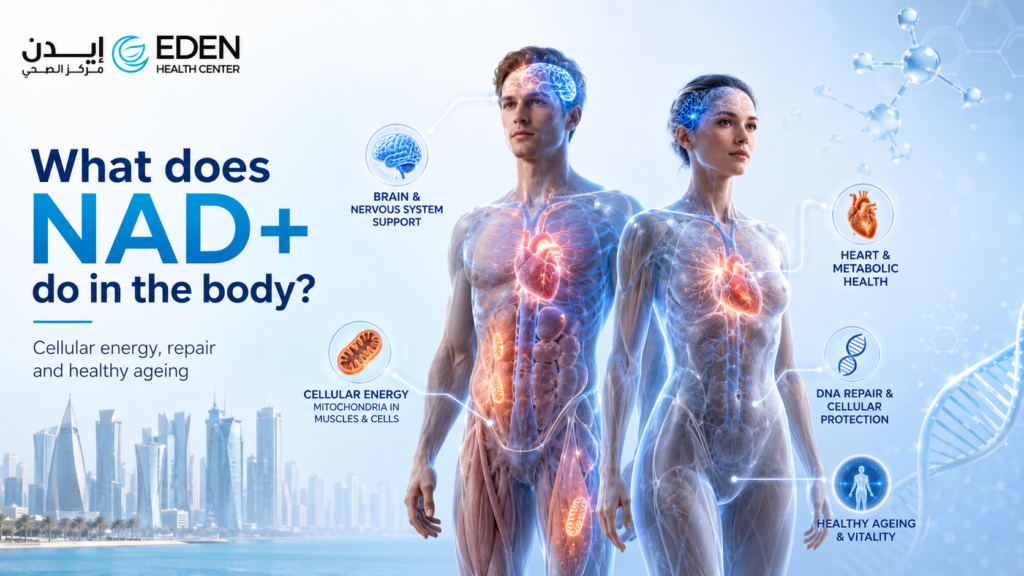
NAD+ plays a central role in metabolism. It helps the mitochondria—the structures responsible for producing much of the cell’s energy—convert carbohydrates, fats and proteins into ATP.
ATP is the main form of energy used by cells for movement, repair, circulation and normal organ function.
2. Participates in DNA-repair pathways
Everyday factors such as metabolism, inflammation, sunlight and environmental exposures can affect DNA.
Certain DNA-repair enzymes use NAD+ as part of their normal activity. This is one reason scientists are studying NAD+ in relation to cellular maintenance and ageing.
3. Supports enzymes linked to cellular stress
NAD+ is used by enzymes including sirtuins and PARPs. These enzymes are involved in cellular stress responses, metabolism, gene regulation and DNA repair.
Although these pathways are scientifically important, activating them by increasing NAD+ has not yet been proven to extend human lifespan.
4. Contributes to normal metabolic health
Because NAD+ is involved in energy metabolism, researchers are examining whether NAD+-boosting strategies could influence glucose regulation, cardiovascular health, muscle function and age-related metabolic changes.
Results in humans remain mixed, and more high-quality, long-term studies are needed.
Does NAD+ decrease with age?
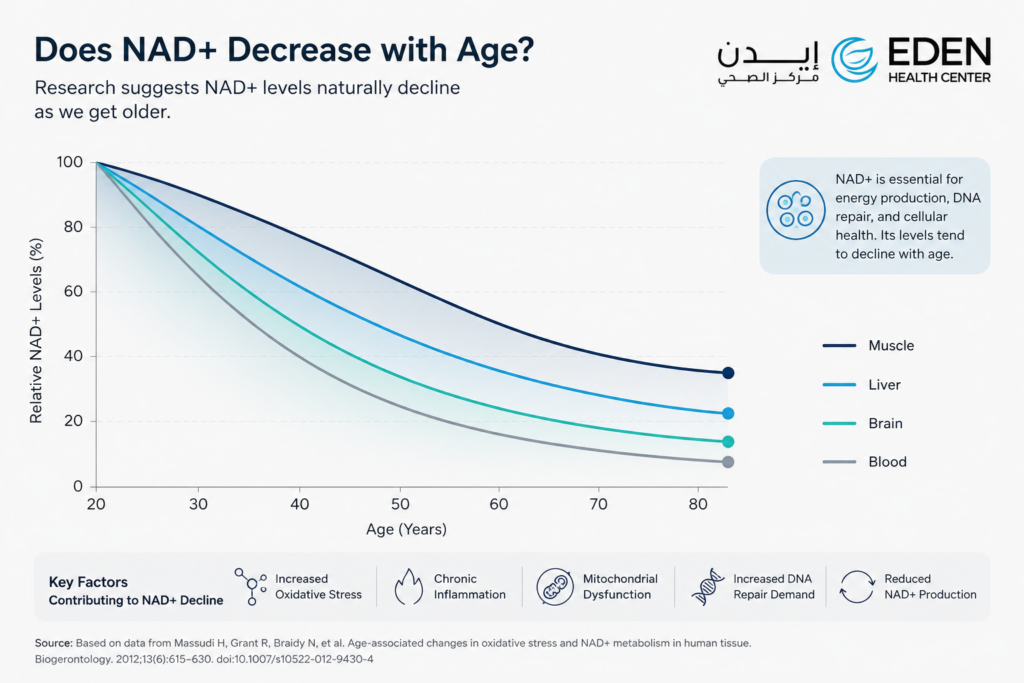
Research suggests that ageing may be associated with lower NAD+ availability in some tissues. Possible contributing factors include:
- Increased cellular stress
- Chronic inflammation
- Changes in metabolism
- Greater use of NAD+ by DNA-repair enzymes
- Increased activity of NAD-consuming enzymes
- Reduced production or recycling of NAD+
However, NAD+ levels are difficult to measure consistently across different organs. A blood measurement may not perfectly represent NAD+ levels in the muscles, brain, liver or other tissues.
A recent review concluded that evidence concerning NAD+ changes in human ageing is still relatively limited and tissue-specific.
Can NAD+ reverse ageing?
There is currently no strong clinical evidence that NAD+ reverses ageing or extends human lifespan.
Animal and laboratory studies have produced promising findings, but results from animals cannot automatically be applied to people.
Human studies show that some NAD+ precursors can increase certain NAD-related biomarkers. Nevertheless, increasing a biomarker does not necessarily mean that a person will live longer, avoid disease or experience noticeable improvements in energy and cognition.
A recent scientific review found clear biological activity from NAD+-boosting interventions, but concluded that clinical effectiveness for general anti-ageing and wellness remains inconclusive.
What is the difference between NAD+, NMN and NR?
These terms are often used together, but they are not identical.
NAD+ is the coenzyme used directly in many cellular reactions.
NMN, or nicotinamide mononucleotide, is a substance the body may use to produce NAD+.
NR, or nicotinamide riboside, is another NAD+ precursor related to vitamin B3.
Oral supplements usually contain precursors such as NR or NMN rather than large amounts of NAD+ itself. Clinical studies suggest that some precursors may increase NAD-related markers, but reported health benefits have been inconsistent.
What is NAD+ IV therapy?
NAD+ IV therapy involves administering an NAD+-containing solution through a vein under clinical supervision.
It is marketed by some wellness and longevity clinics for goals such as:
- Supporting energy
- Improving recovery
- Reducing tiredness
- Supporting mental clarity
- Promoting general wellness
These potential benefits should be presented carefully. Research on intravenous NAD+ for general longevity remains limited, and IV treatment has not been proven to slow ageing or prevent chronic disease.
Before receiving an IV infusion, patients should undergo an appropriate medical assessment. The clinical team should review medical history, medications, allergies, kidney and liver health, pregnancy status and the reason for treatment.
Is NAD+ IV therapy safe?
Safety depends on the individual, the formulation, the dose, the infusion rate, product quality and the clinical environment.
Possible reactions may include:
- Nausea
- Headache
- Abdominal discomfort
- Flushing
- Tiredness
- Dizziness
- Discomfort at the injection site
The US FDA has reported adverse events associated with some compounded NAD+ injectable products, including chills, shaking, vomiting and fatigue. Some incidents were linked to concerns about endotoxin contamination and sterile-compounding quality.
This does not mean that every NAD+ infusion is unsafe. It does mean that injectable products must be sourced, prepared, stored and administered according to strict medical and pharmaceutical standards.
Who should speak to a doctor before NAD+ treatment?
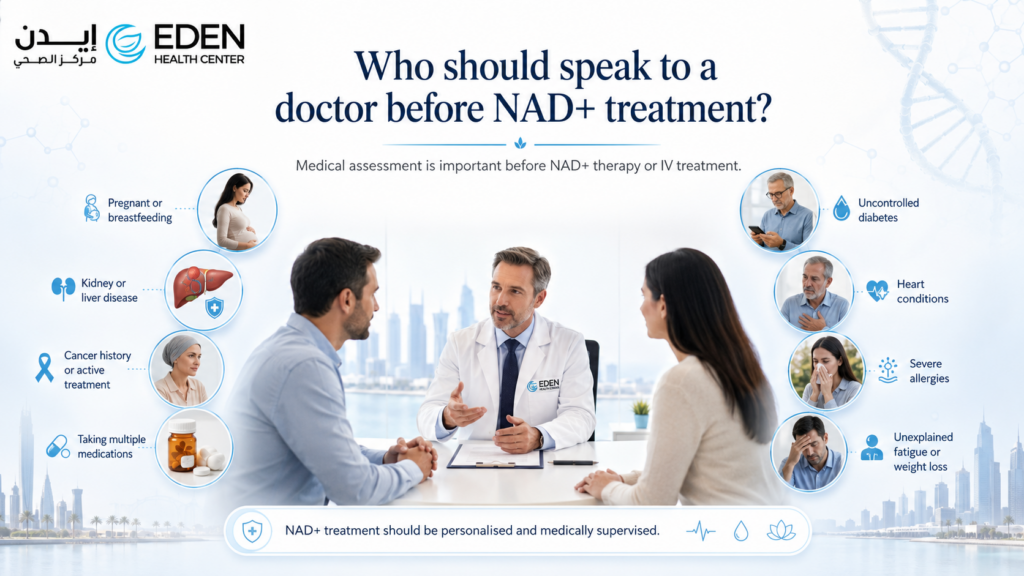
Medical assessment is especially important for people who:
- Are pregnant or breastfeeding
- Have kidney or liver disease
- Have an active or previous cancer diagnosis
- Take multiple prescription medications
- Have uncontrolled diabetes
- Have cardiovascular conditions
- Have a history of severe allergies
- Are receiving chemotherapy, immunotherapy or radiotherapy
- Experience unexplained fatigue or weight loss
Persistent fatigue should not automatically be treated as an NAD+ deficiency. It may be related to anaemia, thyroid disease, vitamin deficiencies, diabetes, sleep disorders, depression, infections or other medical conditions.
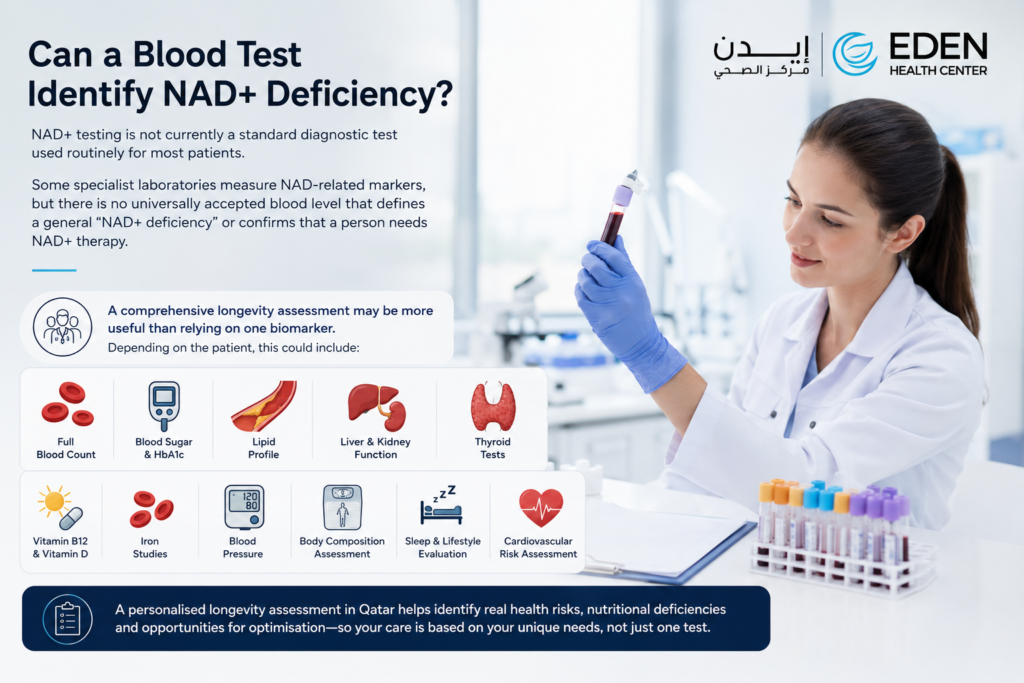
Can a blood test identify NAD+ deficiency?
NAD+ testing is not currently a standard diagnostic test used routinely for most patients.
Some specialist laboratories measure NAD-related markers, but there is no universally accepted blood level that defines a general “NAD+ deficiency” or confirms that a person needs NAD+ therapy.
A comprehensive longevity assessment may be more useful than relying on one biomarker. Depending on the patient, this could include:
- Full blood count
- Blood sugar and HbA1c
- Lipid profile
- Liver and kidney function
- Thyroid tests
- Vitamin B12 and vitamin D
- Iron studies
- Blood pressure
- Body-composition assessment
- Sleep and lifestyle evaluation
- Cardiovascular risk assessment
What supports natural NAD+ production?
The body produces and recycles NAD+ using nutrients obtained through a balanced diet.
Healthy habits that support cellular and metabolic health include:
- Regular physical activity
- Adequate sleep
- Balanced nutrition
- Maintaining a healthy weight
- Avoiding smoking
- Managing blood sugar and blood pressure
- Treating nutritional deficiencies
- Limiting excessive sun exposure
- Completing age-appropriate health screening
These measures have much stronger evidence for healthy ageing than any single infusion or supplement.
NAD+ and longevity care in Qatar
Interest in preventive medicine and healthy ageing is growing in Doha and across Qatar. A responsible longevity programme should be medically led and based on a complete assessment rather than promoting one product as a solution for ageing.
A personalised longevity plan may combine:
- Medical consultation
- Cardiovascular risk screening
- Metabolic and hormonal evaluation
- Nutrition support
- Sleep assessment
- Physiotherapy and functional testing
- Body-composition monitoring
- Preventive screening
- Evidence-based treatment of identified deficiencies
- Follow-up measurements and realistic health goals
NAD+ therapy, when considered, should form only one possible part of a wider clinical plan.
Frequently asked questions
What is NAD+ in simple words?
NAD+ is a natural molecule found in the body’s cells. It helps convert food into energy and supports several cellular maintenance processes.
Is NAD+ a vitamin?
No. NAD+ is a coenzyme. However, the body can produce it using forms of vitamin B3, including niacin and nicotinamide.
Does NAD+ make you younger?
NAD+ has not been proven to make people younger or reverse biological ageing. Research is ongoing into its possible role in cellular health and healthy ageing.
Does NAD+ improve energy?
NAD+ is essential for cellular energy production. Some people report changes in energy after supplementation or IV therapy, but clinical evidence for reliable improvements in healthy people is still limited.
Is NAD+ IV therapy available in Qatar?
Some medical and wellness providers in Qatar may offer NAD+-related services. Patients should confirm that the treatment is prescribed and administered by appropriately licensed healthcare professionals using approved clinical procedures.
How long does an NAD+ infusion take?
Duration varies according to the formulation, dose, infusion rate and patient tolerance. The treating clinic should explain the protocol before treatment.
Is NAD+ therapy suitable for everyone?
No. Treatment suitability depends on a person’s medical history, medications, symptoms and health goals. A doctor should assess the patient before recommending therapy.
Can NAD+ prevent ageing-related diseases?
There is currently insufficient evidence to state that NAD+ therapy prevents cancer, dementia, cardiovascular disease, diabetes or other age-related diseases.
What is the best longevity treatment?
There is no single best longevity treatment. The strongest approach combines regular exercise, healthy nutrition, good sleep, preventive screening, risk-factor control and personalised medical care.
Conclusion
NAD+ is essential for energy metabolism, mitochondrial activity and several cellular maintenance processes. Its connection with ageing makes it an important area of scientific research.
However, NAD+ therapy should not be marketed as a proven method to reverse ageing or extend lifespan. Human research is still developing, particularly for intravenous NAD+ therapy.
For people in Qatar interested in longevity medicine, the safest approach is a medically supervised assessment that identifies real health risks, nutritional deficiencies and achievable goals before recommending supplements, infusions or other interventions.
Start Your Personalised Longevity Assessment in Doha
Discover your metabolic, cardiovascular and functional health through a doctor-led assessment at Eden Health Center.
Book a consultation to receive a personalised healthy-ageing plan based on your medical history, laboratory results and wellness goals.
Medical disclaimer: This article is for educational purposes and does not replace medical consultation, diagnosis or treatment.